
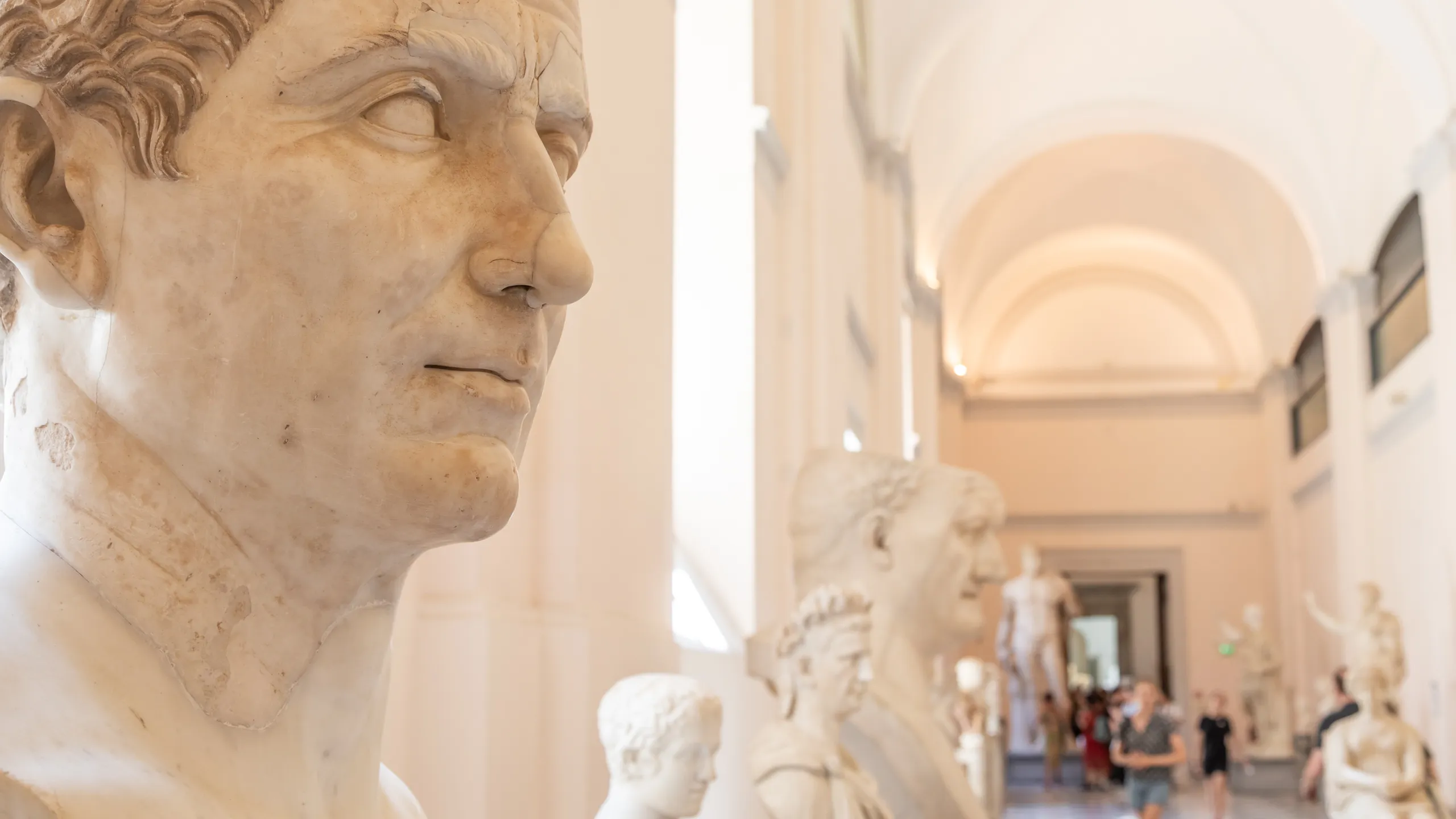
Most of what the Pompeii excavators found that could be carried is in Naples, in the National Archaeological Museum (MANN). That means the detached frescoes, the floor mosaics from the House of the Faun, the 1:100 scale model of Pompeii built in 1879, the finds from the Temple of Isis, bronze and marble furnishings from the houses, and the bronze statues of the Villa of the Papyri at Herculaneum. The papyrus scrolls themselves are not at the MANN: the museum says they are kept and studied at the National Library of Naples. Pompeii keeps the streets and rooms; Naples keeps much of what was inside them.
Rooms at the MANN close and reopen for refurbishment, so we give the state of the galleries once, in the box below (as of 5 November 2026), and nowhere else on this page. Everything else here describes what a section holds, not whether you can walk into it that day.
Check which rooms are open before you go
The MANN closes individual galleries for refurbishment for weeks or months at a time, and it publishes the list of open rooms with an end date. When we checked on 5 November 2026, the museum was closed on Tuesdays and the mosaic collection (home of the Alexander mosaic) and the Secret Cabinet were among the closed galleries. The rooms page gave 21 September to 30 November 2026 for both, while the museum's banner said until further notice. Read the open-rooms page before you plan around any single piece.
Go to Pompeii for the rooms and to Naples for what was cut out of them. If a fresco is not on a wall in Pompeii, it is usually in a frame at the MANN.
Which Pompeii and Herculaneum treasures are in Naples?
| Section | What it holds from the Vesuvian cities | Pieces to look for |
|---|---|---|
| Frescoes | A "manual of Roman mural painting" from the 1st century BC to the 1st century AD, with tools, pigments and sinopias (preliminary sketches) | Sacrifice of Iphigenia (House of the Tragic Poet), Brawl in the amphitheatre, Flying couple (House of the Dioscuri), Flora (Villa Arianna, Stabiae) |
| Mosaics | Floors from houses in Pompeii, Herculaneum and Campania, 2nd century BC to 1st century AD, with an area for the House of the Faun | Dancing Faun statuette, doves drinking from a bowl, Memento mori, the Alexander mosaic, a "Cave canem" |
| Scale model of Pompeii | The city at 1:100 in cork, wood and paper, shown in 1879 | The street grid and each building with its decoration |
| Temple of Isis | All the material from the first religious building excavated at Pompeii (1764) | The inscription recording the rebuilding after the earthquake of AD 62 or 63; paintings from the portico |
| Domus: furnishings from Pompeii (rooms 90-94) | Bronze, marble and terracotta furniture, garden sculpture, lamps and braziers | Bronze table with sphinx, folding tables, the Hall of Griffins |
| Daily-life objects (rooms 85-89) | Cookware, pottery, glass and bronzes from Pompeii, Herculaneum and nearby towns | Everyday kitchen and household sets |
| Secret Room | 250 sexually themed objects, mostly from Pompeii and Herculaneum, censored and kept apart over the centuries | Detached mythological frescoes, paintings from brothels, bronze wind chimes |
| Villa of the Papyri from Herculaneum | Statues and a reconstruction of the villa; not the scrolls | Bronze runners, Resting Hermes, Drunken Satyr, busts of philosophers |

What should you look for if you are coming from Pompeii?
Start from what you saw, or plan to see, and look it up in Naples. Three pairings explain most of what is out of place on the ground.
The House of the Faun. The Park says the statue of the dancing Faun in the main atrium and the great battle mosaic of Alexander and Darius in the exedra are copies, and that the originals are at the MANN. The house was dug in 1830-1832, and the museum devotes an area of its mosaics section to it. The mosaic is about 5.83 by 3.13 meters, made of more than a million tesserae in opus vermiculatum at the end of the 2nd century BC. It is also the piece with the most visible history; see the timeline below.
The House of the Tragic Poet. The Park's page describes the "Cave canem" mosaic at the main entrance, now behind glass, and says the originals of the house's mosaics and paintings are at the MANN. The Naples museum lists a "Cave canem" (inventory 110666) only as "from Pompeii", with no house named. The Park's page does not say whether the museum's piece is that same mosaic, and the museum does not name a house, so we cannot tell you which is which. Treat them as possibly two objects and check the labels. The big mythological panel from that house, the Sacrifice of Iphigenia, is in the frescoes section.
The Temple of Isis. You will find the building in Pompeii and the fittings in Naples. It was the first religious building excavated at Pompeii, in 1764, and its paintings were so well preserved that it was documented in drawings and engravings. The MANN gallery arranges the wall fragments at their original heights and shows the marble inscription that records the rebuilding after the earthquake of AD 62 or 63, paid for by Numerius Popidius Celsinus.
Why start with the scale model of Pompeii?
Because it is the one object that shows you the whole town at once. Giuseppe Fiorelli, who by the museum's account directed the excavations from 1861 and curated the museum from 1863 to 1875, commissioned it from Felice Padiglione. It was first shown in 1879 and reproduces the street grid at 1:100, every building with its decoration and furnishings, in cork, wood and paper. Paper stands in for mosaic floors, and the painted walls follow the real divisions of the different styles.
The MANN itself points out a second use: it records what was visible at the time and has since been washed away in the real ruins. Seen before a Pompeii visit, it helps with orientation. Seen after, it tells you which blocks you never reached.
What did the Herculaneum finds add?
The MANN's Vesuvian collections are not only Pompeii's. The frescoes section includes Herculaneum's House of the Stags, with still-life panels, and the "knucklebone players" from Herculaneum, and the mosaics section a nymphaeum niche from the House of the Skeleton. The Boscoreale megalographies of the villa of Publius Fannius Synistor, and a sinopia from Oplontis, are there too; for those sites, see our page on Oplontis, Stabiae and Boscoreale.
The Villa of the Papyri section is the strongest argument for a Naples day if you plan to see Herculaneum. The villa stood on the sea with a 250-meter front. The Bourbon engineer Karl Weber directed digging there from 1750 to 1764, through tunnels and wells, because the villa was buried under about 27 meters of hard volcanic rock. The MANN says the bronze sculptures from it are the most significant group of Roman bronzes to have survived, and names the runners, the resting Hermes, the drunken satyr and portraits of kings and philosophers.
Where are the Herculaneum scrolls?
Not at the MANN. The museum's own page says the more than 1,800 charred papyrus scrolls found in the villa are preserved and studied at the National Library of Naples. A few were given away in the 18th and 19th centuries; the scroll behind the 2024 breakthrough is kept in Paris, at the Institut de France. What the MANN shows is the story of how people tried to read them, from the machine designed by Abbot Antonio Piaggio in the second half of the 18th century to non-invasive scanning with AI help. In February 2024 the Vesuvius Challenge, an international prize project, awarded its grand prize for reading passages from inside an unopened scroll; its organizers then said roughly 95% of that scroll remained to be read, and the reading has continued since. The Herculaneum Park posts the status of the villa itself on its own page.
How the finds reached Naples
Dates the MANN gives in its own pages.
The origins
-
1750
Bourbon digs begin at the Villa of the Papyri
Karl Weber directs the work until 1764 and draws the plan that is still admired.
-
1764
The Temple of Isis comes to light
The first religious building excavated at Pompeii; its paintings and finds are documented and taken to Naples.
The growth
-
1831
The Alexander mosaic is found
It lies in the exedra of the House of the Faun, dug between 1830 and 1832.
-
16 November 1844
The mosaic leaves Pompeii
After 12 years of debate, it travels on a cart pulled by 16 oxen. A box fell near Torre del Greco; opened in January 1845, the mosaic was intact.
-
1863
Fiorelli becomes curator
By the MANN's account he had directed the excavations since 1861 and holds the museum post until 1875.
-
1879
The scale model of Pompeii is shown
A cork-and-paper city at 1:100, made by Felice Padiglione for Fiorelli.
-
1916
The mosaic goes on a wall
The museum's director has it mounted upright in the new mosaic rooms, the display it has had since.
Should you see the MANN before or after Pompeii?
There is no official order, and we have no visitor data to prove one. The reasoning is this. Naples first gives you the objects and a map of the city, so the empty rooms in Pompeii have furniture in your head. Pompeii first gives you the places, so the frescoes in Naples have a wall to go back to. If you have only one chance and a long Pompeii day, the museum is the easier half to move: it is indoors and a metro ride from Naples Central Station.
Plan around the museum's weekly closing day, noted in the box above, rather than around the weather. Pompeii does not share that closing day in the Park's timetable, so it is the safer site to book first and the museum the one to fit around it. For the Pompeii half, our itineraries page lays out the options from two hours to two days, and the tickets page lists the museum's ticket structure with prices. The Park's Pompeii ticket does not open the MANN: the Park's list of sites it opens for free with a ticket does not include it, and the museum sells its own.

How do you get to the MANN, and how long do you need?
The museum is at Piazza Museo 19. By its own directions: from Naples Central Station take Metro Line 1 to Museo or Line 2 to Cavour; from the port take Line 1 from Municipio to Museo; from the airport, the Alibus to the Central Station and then the metro. Naples-Pompeii train details are on our getting there page.
The museum's audio guide covers 90 items in 85 minutes, in Italian, English, French, Spanish and German. That is a sensible minimum for a visit built around Pompeii, and the Farnese sculptures, the Egyptian collection and the Villa of the Papyri add more if you have the energy. For accessibility, the MANN says its building can be entered from three sides, that the western entrance at the vehicle gate suits wheelchairs and strollers, that lifts serve only the wing they are in, and that disabled visitors may go to the front of the line; guide dogs are admitted. Our page on Pompeii accessibility covers the site itself.
Naples archaeology tours and tickets
Guided museum visits and combined Naples archaeology tickets from our partners, if you prefer to have the collection explained.
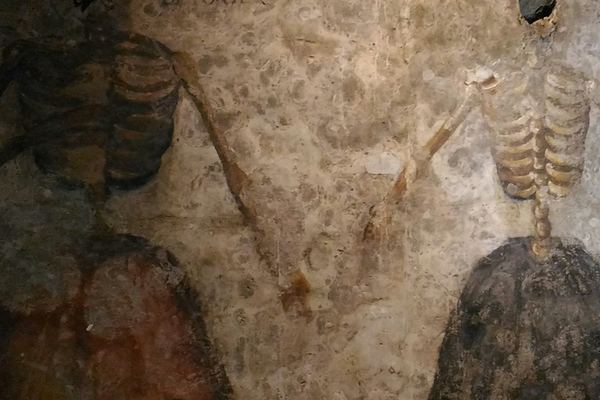
Catacombs of San Gaudioso Guided Tour Beneath Naples' Sanità District
A 50-minute guided visit to the crypt of Saint Gaudiosus below the Sanità district, where tombs were extended over centuries for nobles and Christian figures.
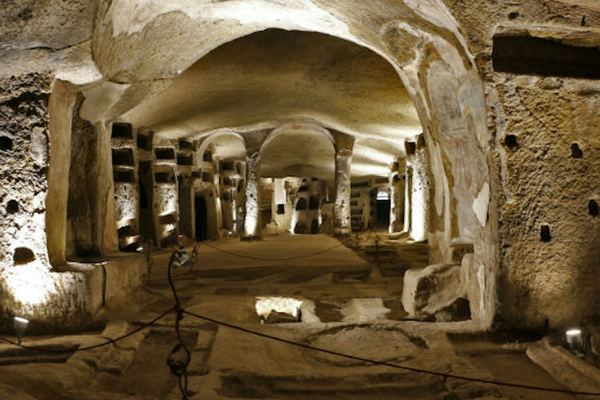
Catacombs of San Gennaro Naples: 50-Minute Guided Visit with the Basilica
One guided walk covers both the catacombs and the Basilica of San Gennaro, resting place of the patron saint of Naples, in about 50 minutes under the city.
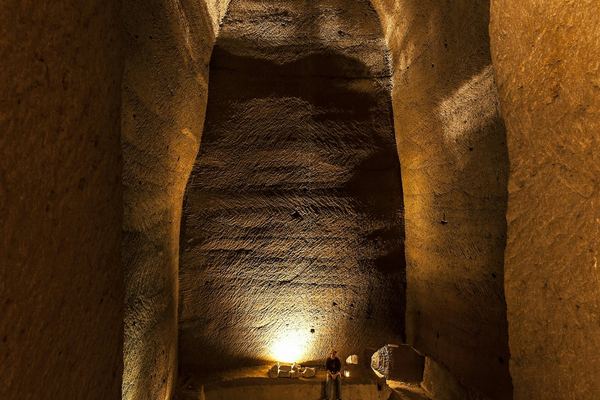
Galleria Borbonica Guided Tour in Naples: Underground History and Vintage Cars
A one-hour guided visit to the Galleria Borbonica, where ancient history sits beside vintage automobiles. Suitable for all ages and for history lovers.
Ratings collected by Tiqets
Questions about Pompeii at the MANN
What from Pompeii is at the Naples Archaeological Museum?
Detached frescoes, floor mosaics, the 1:100 scale model of the city, finds from the Temple of Isis, bronze and marble furnishings, and a collection of 250 erotic objects. The houses and streets stay in Pompeii.
Is the Alexander mosaic in Pompeii or in Naples?
The original belongs to the MANN and came from the House of the Faun. The Park says a copy lies in the house's exedra. For whether the original can be seen, see the box near the top of this page.
Are the Herculaneum papyrus scrolls at the MANN?
No. The museum says the more than 1,800 scrolls are kept and studied at the National Library of Naples. The MANN shows the bronze statues and the story of the villa and of the reading techniques.
Is the "Cave canem" mosaic in Naples or in Pompeii?
Possibly both, and we cannot say. The Park shows one at the entrance to the House of the Tragic Poet, behind glass, and says the originals of that house's mosaics and paintings are at the MANN. The MANN lists a "Cave canem" as from Pompeii without naming a house. Check the labels.
What is the Secret Room at the MANN?
A collection of 250 sexually themed objects, mostly from Pompeii and Herculaneum, which the museum says was censored and kept apart from the other collections over the centuries. The MANN also calls it the Secret Cabinet. See the box above for its state.
Does my Pompeii ticket include the MANN?
No. The Park's ticket page lists the other sites it opens free with a Pompeii ticket, and the MANN is not one of them. The museum has its own ticket.
Should I see the museum before or after Pompeii?
Neither order is official. Naples first gives you the objects and the scale model, Pompeii first gives you the places. Pick the order that fits the day you have.
How do I get from Naples Central Station to the MANN?
By metro: Line 1 to Museo or Line 2 to Cavour, according to the museum.
Data verified on . Collections and history: the MANN's pages. Houses and copies: the Park's pages. Room status, hours and prices change; follow the links. Editorial Policy