
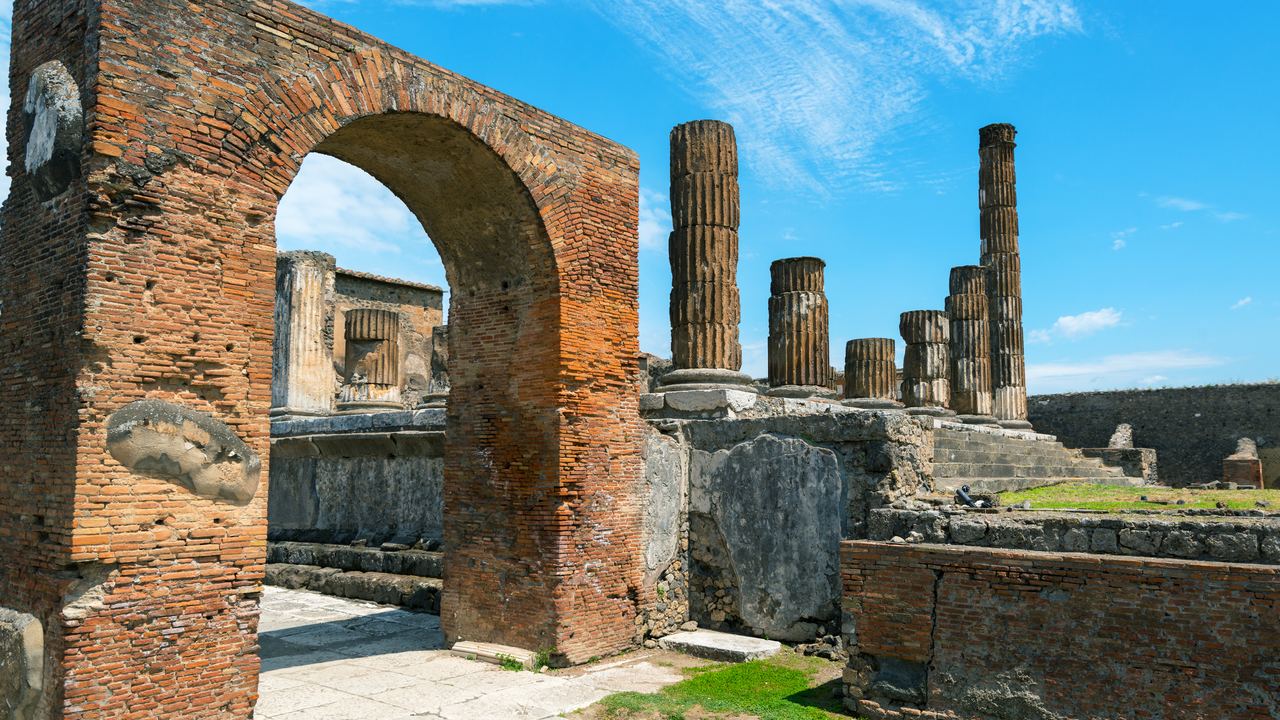
Pompeii's history, houses and everyday life are covered here in nine guides, each built on the Park of Pompeii's own pages, on UNESCO and on published studies. Pick the one that matches your question: the event, the discovery, the people, the buildings or the volcano. Pompeii was a working Roman town, its population put at anywhere from about 10,000 to 20,000, that was buried in AD 79 and dug up from 1748 onward. About two thirds of it has been excavated. The table below sends each question to a page, and a short timeline after it gives the dates the other pages hang on.
One rule for this whole section: when sources disagree we show both positions and say who holds which. Where nobody knows, as with the total number of the dead, we leave the number out.
Which page answers your question?
| Your question | Page | What you get |
|---|---|---|
| What happened during the eruption, and when? | The eruption of AD 79, hour by hour | Phases of the eruption, Pliny's few clocks, the 24 August argument, how people died |
| Who found Pompeii, and how was it dug? | How Pompeii was found | Fontana's canal, the 1748 digs, Fiorelli, the collapse of 2010, Regio V and IX |
| Are the casts real people? | The body casts | 104 casts, the method of 1863, what the 2024 DNA study overturned |
| How did Pompeians live? | Daily life in Roman Pompeii | Snack bars, bakeries, baths, graffiti, work and slavery, with the address of each clue |
| How do I find a house, and what does VI.15.1 mean? | Houses and buildings: an address book | The Regio, insula and entrance system, with 49 buildings and where their famous pieces ended up |
| What do the painted walls mean? | The four painting styles | Mau's four styles, fresco technique, where to see originals in place and in Naples |
| What does a word like impluvium mean? | The glossary | 98 terms in plain language, from atrium to tephra |
| Is that story true? | Myths and facts, checked | Thirty claims with a verdict and a source |
| What is the volcano doing now? | Vesuvius and Pompeii | Somma and the cone, the eruptions since 79, monitoring and the red zone |

The event: eruption, casts and the volcano
Pompeii was not buried by lava. UNESCO says it was buried largely under a thick layer of ash and lapilli, and the Park puts the pumice at about three meters deep. Then fast, hot clouds of gas and ash ran through the streets. 1,044 victims have been recovered in the excavated part of the town, and 104 plaster casts, by the latest count, have been made since 1863. Those two numbers are routinely confused, and the casts are the part of the story where a 2024 DNA study changed the most.
Our pages take these in order. The page on the eruption hour by hour separates what Pliny the Younger saw from what the volcanologists reconstruct. The page on the body casts explains how a body becomes a cast and how to look at one with children. And Vesuvius and Pompeii covers the mountain itself: quiet since 1944, monitored around the clock, with Pompeii inside the red zone of the national emergency plan (as of November 2026).
The city: houses, streets and painted walls
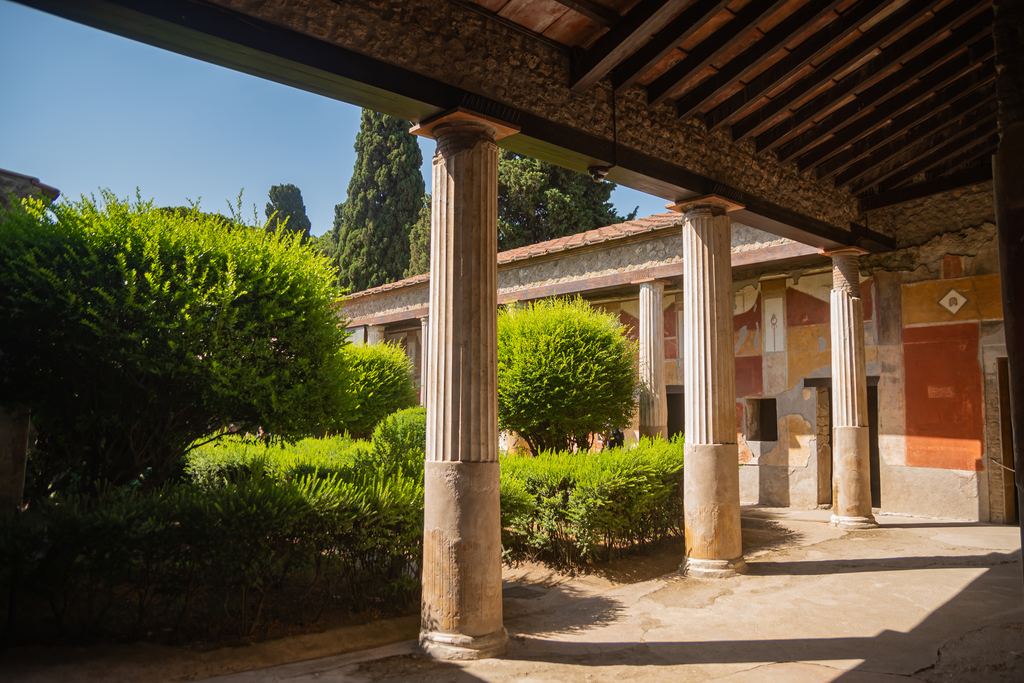
Pompeii has no street names that survive, so archaeologists use an address. The town is divided into nine regiones numbered I to IX, each into blocks (insulae) and numbered entrances, a system that goes back to Giuseppe Fiorelli in the 1860s. VI.15.1 is Regio VI, insula 15, entrance 1: the House of the Vettii. Once you can read the code, maps, guidebooks and Park pages stop looking like noise. The address book of houses and buildings is built around it. We do not say which buildings are open, because the Park changes its list from week to week and publishes it at pompeiisites.org/en/houses.
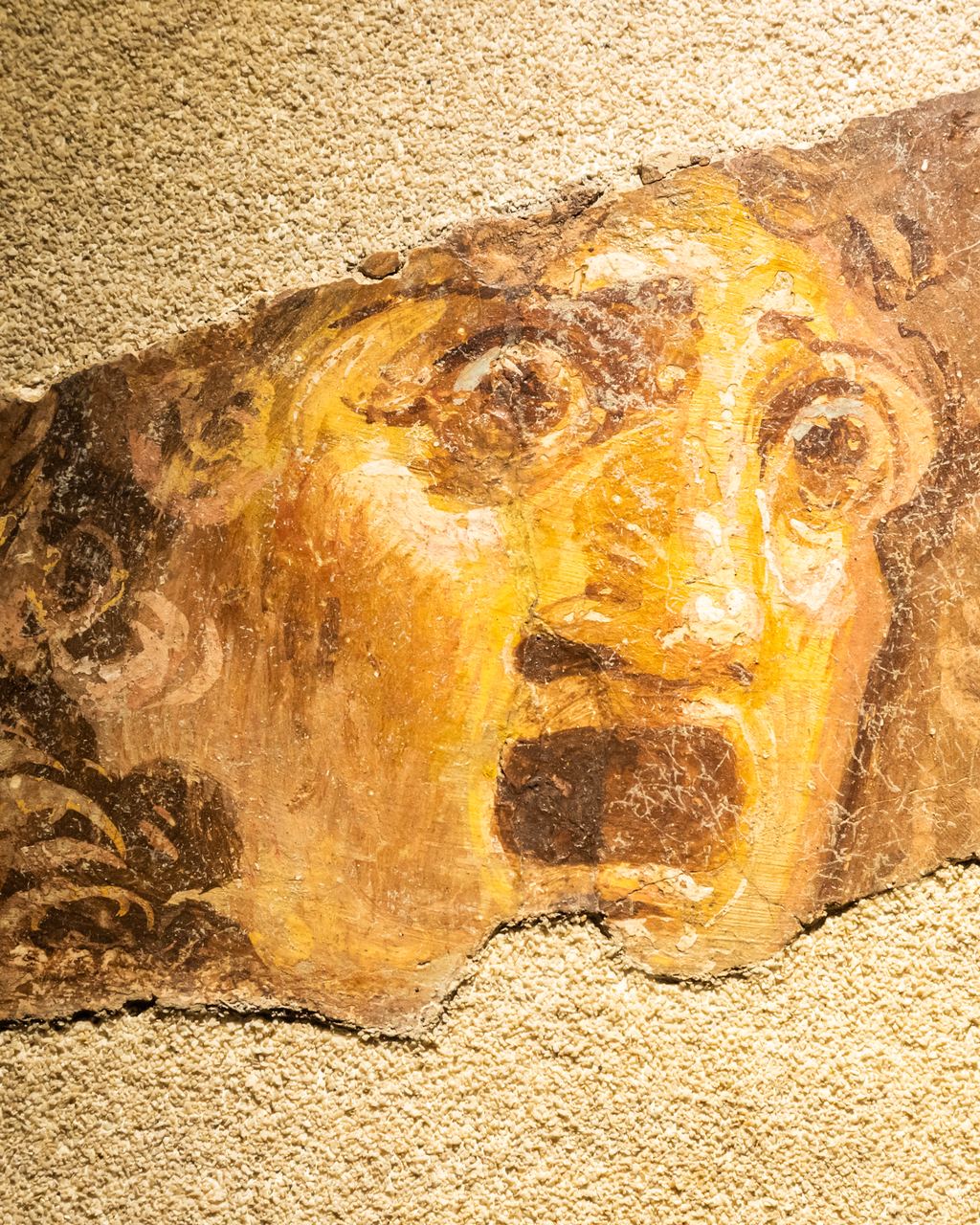
The people who used those buildings are the subject of daily life in Roman Pompeii: the Park counts at least eighty thermopolia, or street-food counters, and UNESCO notes that an election was imminent and political slogans cover the walls. The decoration on those walls follows four styles that August Mau defined in the nineteenth century, covered in our page on Pompeian wall painting.
A reading order for a first visit
If you are going to Pompeii and want some background first, read in this order. Start with the eruption hour by hour for the event itself. It explains why the ruins look the way they do: many roofs gave way under the pumice and the shaking, and the streets were filled with deposits until the excavators cleared them. Then read the address book, because it turns the plan on your ticket into something you can navigate. Finish with the casts page if anyone in your group is likely to be affected by seeing them, since it covers how to prepare children and what the 2024 study did and did not show.
If you are not going, or you are going later, the history of the digs and the myth check are the two that reward reading on their own. The first shows how a site becomes legible over more than 270 years of changing method. The second is the quickest way to find out which of the things you were told on a tour or read on a blog hold up.
How these pages are written
Each Discover page names its sources in the text: the Park of Pompeii for what it says about its own site, UNESCO for the listing and the excavated area, Italy's Civil Protection Department for the volcano, Pliny and the other ancient writers for what they actually wrote, and peer-reviewed studies for the science. Where a source is a private website or a reference work and not a primary document, the page says so. Numbers that differ between sources are shown with their differences.
We link to the Park's list of open houses instead of copying it, because it changes week to week. Prices sit only on the ticket guide, with the date they were checked.
How was Pompeii found, and which claims hold up?
Digging began on the Civita hill in 1748 under Charles of Bourbon, after roughly ten years of exploring Herculaneum. UNESCO gives about 44 hectares as the excavated area, and the Park says its recent digs in Regio IX are limited to what is needed to secure the excavation fronts. Our page on how Pompeii was found tells it from Fontana's canal to the present.
To test something you heard on a tour, Pompeii myths and facts, checked sets thirty common claims against their sources. For unfamiliar words, the glossary gives short definitions of 98 terms. Beyond the walls, the Roman sites around the volcano and the Naples museum are on Beyond Pompeii.
Pompeii in nine dates
Years that frame the other pages, each from the Park or UNESCO. The full excavation timeline is on the page about how Pompeii was found.
The origins
-
6th century BC
A temple at the Sanctuary of Apollo
The Park dates the first temple at the Sanctuary of Apollo to the sixth century BC, an archaic temple in the town's old religious center.
-
2nd century BC
The Stabian Baths
The Park dates the baths to the second century BC, and they were rebuilt in several phases. Some older sources say the fourth or third century BC.
-
80 BC
A Roman colony
The Park places the colonial age at 80 BC. The theatres were built and enlarged between then and the Augustan age.
The growth
-
AD 62 or 63
The earthquake
Tacitus has it in 62, Seneca's consuls point to 63. Repairs were still under way in 79.
-
AD 79
Vesuvius buries the town
Under three meters of pumice and then surges. The day is traditionally 24 August and is argued over.
Today
-
1748
Digging starts on the Civita hill
Charles of Bourbon orders the work, ten years after exploration began at Herculaneum.
-
1863
The first plaster casts
Giuseppe Fiorelli pours plaster into the hollows in the ash.
-
1997
UNESCO World Heritage listing
Pompeii, Herculaneum and Torre Annunziata are listed together on a property of 98 hectares.
-
2018 to 2025
New digging in Regio V and IX
A thermopolium in Regio V, a large private bath complex in Regio IX.
Two cautions. The 6th century BC, 2nd century BC and 80 BC entries come from the Park's descriptions of single buildings, not from a general chronology of the town, and archaeologists keep revising early dates, so treat them as the Park's reading of those buildings and nothing wider. And 98 hectares is UNESCO's figure for the whole listed property, not for Pompeii alone.
Where to go from here
If you are planning a visit rather than reading, the planning guides start at Plan your Pompeii trip: how long to stay, which ticket, how to get there. If a question is not covered, sixty questions answered is the quickest place to find where it lives.
Questions about Pompeii's history
Who discovered Pompeii?
No single person. A canal cut through the buried town at the end of the sixteenth century, and systematic digging began in 1748 under Charles of Bourbon. See how Pompeii was found.
Was Pompeii buried by lava?
No. UNESCO says it was buried largely by ash and lapilli, and the Park describes three meters of pumice followed by hot surges. Details in the eruption hour by hour.
How many people died at Pompeii?
1,044 bodies have been recovered in the excavated part of the town. Nobody has a reliable total of the dead, and we do not give one.
Are the bodies at Pompeii real?
The victims were real people. The figures you see are plaster casts of the hollows their bodies left in the ash, about a hundred in all. Read the body casts page.
What did people eat in Pompeii?
The Park lists spiced wine, soups of cereals and legumes, focaccia, olives, eggs and cheese for the snack bars. No menu survives, so this is a reading of the evidence. See daily life in Roman Pompeii.
How much of Pompeii has been excavated?
About two thirds of the town by one study, and about 44 hectares according to UNESCO. The rest stays under the ash.
What does VI.15.1 mean?
Regio VI, insula 15, entrance 1: the House of the Vettii. The system goes back to Fiorelli. The address book explains it.
Data verified on . Facts from the Park of Pompeii, UNESCO and the studies cited on each linked page, checked 5 November 2026. Editorial Policy