
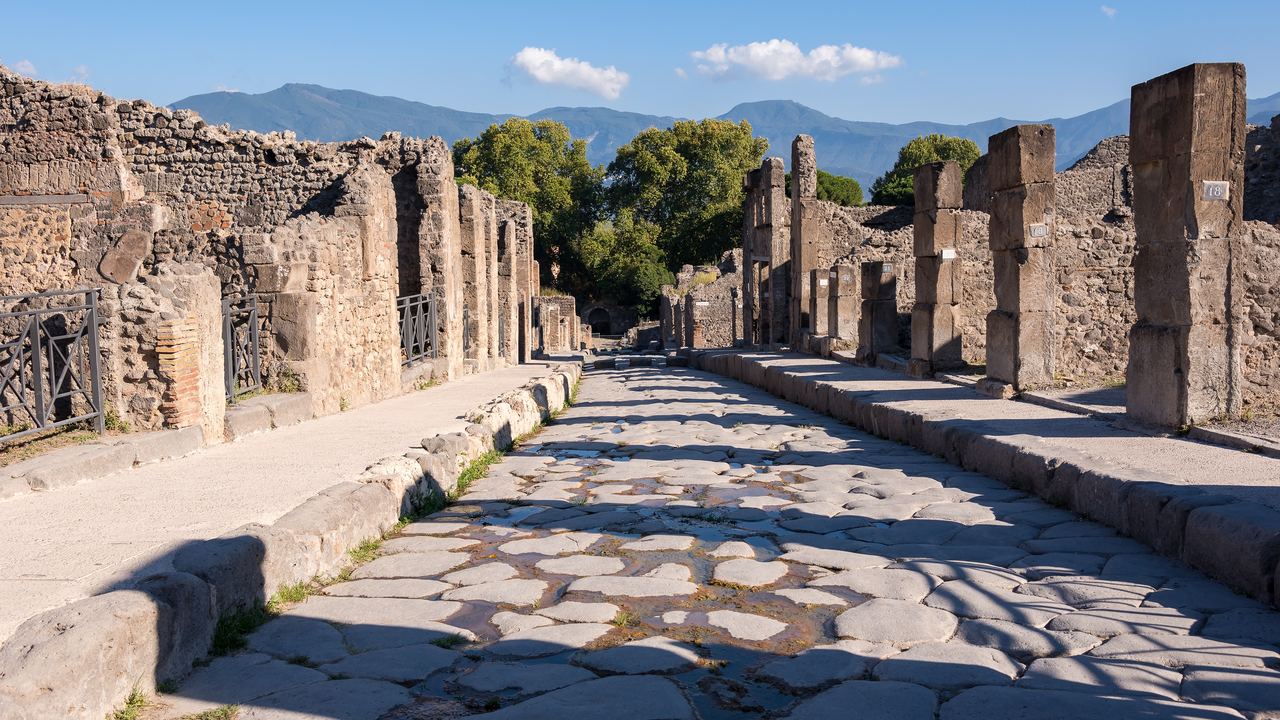
Pompeii has a facilitated route called "Pompei per tutti" (Pompeii for All), which the Park describes as over 3.5 km long, running from Piazza Anfiteatro to the Sanctuary of Venus, for visitors with reduced mobility, for parents with strollers, and for anyone who wants a more comfortable itinerary. It is not fully step-free: the Park itself reports ramps steeper than 8%, level changes under 5 cm and stretches of ancient paving that are not flat. Wheelchairs can be borrowed on reservation (Park communiqué of 25 June 2026), and entry is free for visitors with disabilities and, under conditions, a companion.
We are independent and not affiliated with the Park. We read its pages on 5 November 2026, and everything that can change is dated as of that day.
Our advice: the accessible route is a long loop, not a shortcut. Between Piazza Anfiteatro and the Forum the straight-line distance is under 900 m (our calculation from coordinates); the route is over 3.5 km. Plan for time, not for speed.
What is the "Pompei per tutti" route?
The itinerary has existed since December 2016, according to the Park's FAQ. The Park's current pages (updated 2024 to 2026) give a length of over 3.5 km, while its 2022 service charter said about 3 km; we use the more recent figure. Access is only from Piazza Anfiteatro. You can leave there or at Piazza Esedra, through the lift of the Antiquarium, according to the Park's accessibility page.
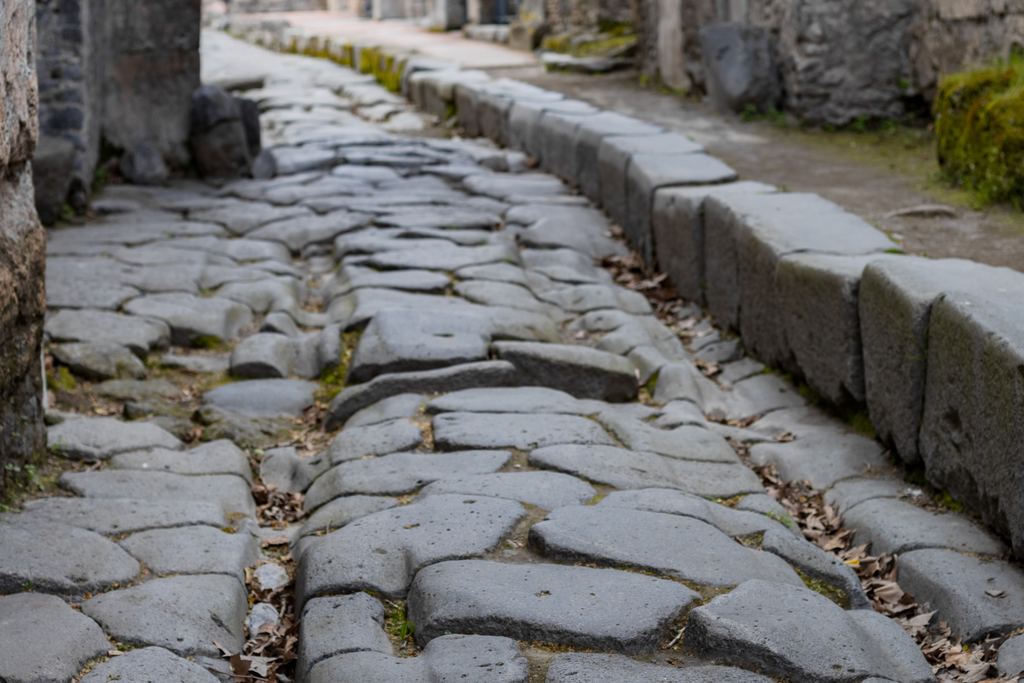
The Park lists what to expect underfoot: ramps sometimes above 8%, level changes below 5 cm, sections of ancient pavement that are not level, and stretches where two wheelchairs fit side by side only in places. The route runs through the ancient city, so some houses and shops along it can be closed on a given day. The Park publishes the list of open buildings, and so do we: pompeiisites.org/en/houses.
How do you borrow a wheelchair at Pompeii?
As of the Park's communiqué of 25 June 2026, the most recent notice we found on the subject, there are 24 chairs (18 new ones funded by the national recovery plan and 6 folding chairs in service since January 2024), available at Piazza Esedra and Piazza Anfiteatro, on reservation, with an identity document left at pickup. Reserving is the rule, and the Park is the only reliable source on whether the service is running on your date, so write to [email protected] or call +39 081 8575347 before you travel. The Park's Italian accessibility page, which we read on 5 November 2026, still says the service is temporarily suspended; the notice of 10 June said the same. We follow the later communiqué, but confirm with the office before you travel.
Our advice: ask for a chair when you book the ticket slot, not on the day, and tell the office where you plan to enter. The chairs are manual; the Park does not mention electric ones.
Is entry free for visitors with disabilities?
Under the Ministry of Culture's concessions (Ministerial Decree 507 of 11 December 1997 and later amendments), entry is free for visitors with disabilities and for a family member or another companion who proves they belong to social-health assistance services. The companion is free only on that condition, so do not assume "a companion is always free". The same page lists free entry for licensed EU guides who show their license. The national rule applies to state sites including Pompeii, Herculaneum and the National Archaeological Museum of Naples. Tickets are named and staff can check ID at entry, so bring the paperwork that proves your status. Prices for everyone else are on our tickets page.
Senses
Tools for blind, deaf and intellectually disabled visitors
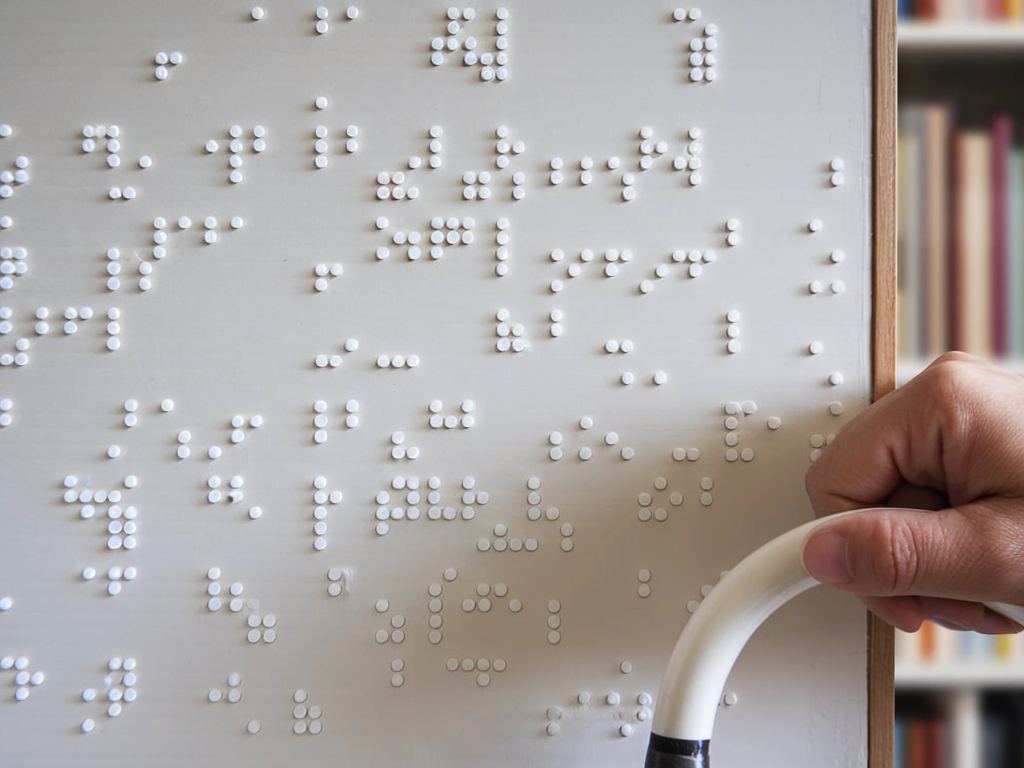
A 2025 project funded by the national recovery plan, "Pompei tra le mani", gave the Park a tactile support with relief and Braille at the Piazza Anfiteatro entrance, 3D models, QR codes with descriptions in Italian Sign Language (LIS), a map for non-visual reading and a sensory station. The Park also offers LIS visits through a 2018 agreement with ENS Napoli, on an experimental basis.
Two easy-read guides ("Museo per tutti", printed April 2024) help people with intellectual disabilities and propose three routes. One caution: the guide says you can come back as often as you like, while the ticket allows one entry. Follow the ticket.
What is the ground like on the accessible route?
Article 9 of the regulation says the routes follow the ancient city almost exactly and have drops, variable heights and fairly significant irregularities and gaps, and that people with mobility or cardiovascular problems should show extreme prudence. The visit "requires significant physical effort". The Park's accessible route reduces the problem but does not remove it.
What we would do (advice): wear shoes with grip and a firm sole, take a companion who can push on slopes, and go in a quiet month, because the daily cap of 20,000 visitors makes narrow streets harder to share. Our crowd calendar shows which months are calmer. Pack for the weather too: what to wear and bring.
Toilets are at the entrances and at several points inside; the Park's 2024 guide notes some steps at the Casina dell'Aquila, where the restaurant is. We could not find a published count of accessible toilets. Guide dogs are admitted, with certification.
| Place | What the source says | Check before going |
|---|---|---|
| Pompeii excavations | Facilitated route over 3.5 km from Piazza Anfiteatro; wheelchairs on reservation at Piazza Esedra and Piazza Anfiteatro | Reservation by email or phone; partial closures |
| Villa di Diomede | Visitors with disabilities enter from the street outside, after a phone call; external lift | Phone the Park first |
| Boscoreale | Described as fully accessible, with ramp and lift | Opening days |
| Oplontis | Facilitated access from Via Margherita di Savoia; announce the visit by phone | Phone first |
| Stabiae | Barrier-free paths; wheelchairs can reach the villas | Opening days |
| Shuttle between sites | The Park's shuttle has storage for large luggage but no disabled access | Plan another transport |
| Herculaneum | "Ercolano per tutti" route; downhill ramp at the entrance; free wheelchairs at the ticket office while supplies last (as of November 2026) | Closed areas change: check the Park's notices |
| Naples National Archaeological Museum | Third entrance (vehicle gate, west side) for disabled visitors and strollers; lifts each serve one wing; free entry for visitors with disabilities; free tactile tours on reservation | Entrance on the day; opening hours |
Which alternatives are easier: Herculaneum and the museum?
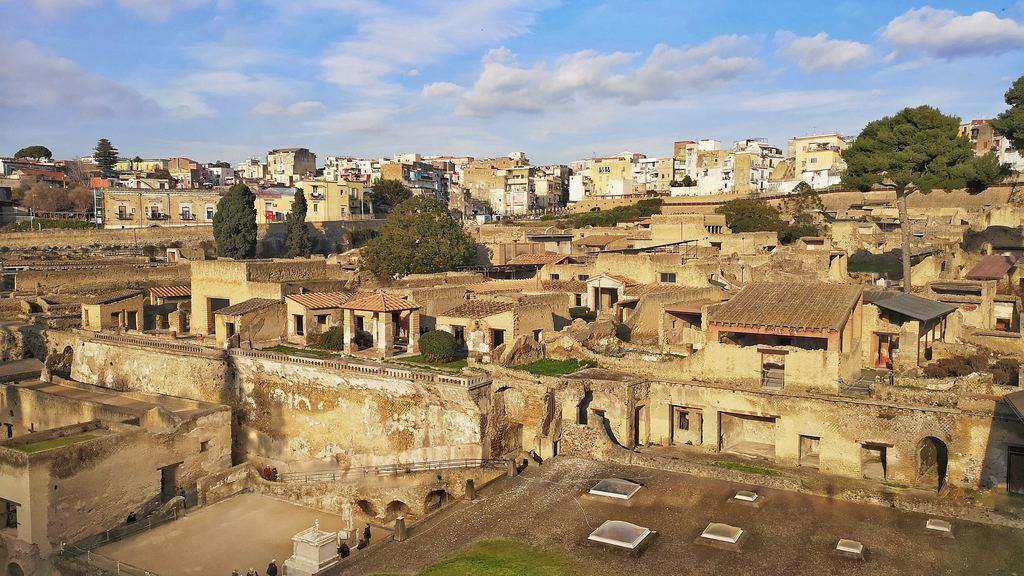
Herculaneum is smaller. The Park's "Ercolano per tutti" route is marked blue on the map. Its recommended path starts with a downhill ramp at the entrance and leaves through the bridge on the third cardo, and anyone who prefers not to use the ramp can use the bridge both ways. As of November 2026 the Park lends wheelchairs at the ticket office free of charge, while supplies last. Our comparison is on Pompeii or Herculaneum? and the tours are in the Herculaneum category.
The National Archaeological Museum of Naples (MANN) keeps the finds from both towns. It has three entrances, and the third, the vehicle gate on the west side, can be used by disabled visitors and visitors with buggies. The museum says disabled visitors have priority entry and enter free, parking for disabled visitors is available on request, and the lifts serve only their own wing. As of November 2026 the museum's schedule page gives 9:00 to 19:30 with last entry at 18:30, while its services page says 19:00; follow the schedule page. Read more in Pompeii at the Naples Archaeological Museum.
How do you get to the entrance without stairs?
The accessible route starts at Piazza Anfiteatro. The nearest rail stops are Pompei Santuario on the Naples to Poggiomarino line and the Trenitalia stop at Pompei; both are roughly 500 to 700 m from the entrance in a straight line (our estimate from map coordinates). We did not verify the lifts or platforms of those stations, and the Park shuttle has no disabled access, so ask the rail operator EAV before you travel. Transport is covered in Getting to Pompeii.
Before you go: reserve the wheelchair, confirm the entrance with the Park, pick a quiet month, and keep a flexible plan. A short visit on the accessible route beats an exhausting one on the original streets.
How would we plan a day on the accessible route?
This is advice, not a Park itinerary. As of November 2026 the Park is open from 9:00 to 17:00 from 15 October to 15 March, with last entry at 15:30, and until 19:00 with last entry at 17:30 from 16 March to 14 October. Buy a ticket for the morning slot, because the second slot starts at 13:00 and leaves little time at the winter hours.
- Reserve a wheelchair by email or phone, and ask which entrance will have it.
- Arrive at Piazza Anfiteatro early; the Park's entrances have security checks.
- Follow the route at your own pace, and rest at the toilet points the Park lists.
- Leave at Piazza Anfiteatro, or at Piazza Esedra through the Antiquarium lift if the Park confirms it is working.
- Do not plan a second site the same day. Herculaneum has its own ticket and its own rules, and a separate day suits it better.
For how long a standard visit takes and which sequences work, see our itineraries; the accessible route is longer than its distance suggests.
Need the whole plan in one place?
Tickets, transport, time and what to bring are all in the planning hub.
Accessibility questions, answered
Is Pompeii wheelchair accessible?
Partly. The Park offers a facilitated route of over 3.5 km from Piazza Anfiteatro, but it reports ramps over 8%, level changes under 5 cm and uneven ancient paving. Two wheelchairs pass side by side only in some stretches.
Can I rent a wheelchair at Pompeii?
As of the Park's notice of 25 June 2026, it lends 24 chairs at Piazza Esedra and Piazza Anfiteatro on reservation, with an identity document left at pickup. Contact [email protected] or +39 081 8575347 beforehand.
Is a stroller allowed on the accessible route?
Yes. The Park names parents with strollers among the users of the route.
Do companions pay?
A family member or companion who proves they belong to social-health assistance services enters free, under the national rule. It is not an unconditional right.
Where do I enter?
Access to the accessible route is only from Piazza Anfiteatro. You can leave from there or from Piazza Esedra via the Antiquarium lift.
Are there tools for blind or deaf visitors?
The Park describes a tactile support with Braille at Piazza Anfiteatro, 3D models and QR codes with descriptions in Italian Sign Language. LIS visits are offered on an experimental basis.
Is Herculaneum more accessible than Pompeii?
It is smaller and has a recommended route with a downhill ramp. Free wheelchairs are available at the ticket office while supplies last (as of November 2026).
Are guide dogs allowed?
Yes, with certification shown at the entrance (regulation, article 7). For Herculaneum and the Naples museum, ask the site.
Data verified on . Read on the Park's, Herculaneum's and MANN's pages and the Ministry of Culture's concessions. Notices on wheelchairs conflict; we follow the later one. Editorial Policy